
 English
  French
  Spanish
  Turkish
  Russian
  Portuguese
  Arabic
  Italian
  Thai
Thai  Indonesian
  Malay
Malay  Vietnamese
  Korean
  Japanese
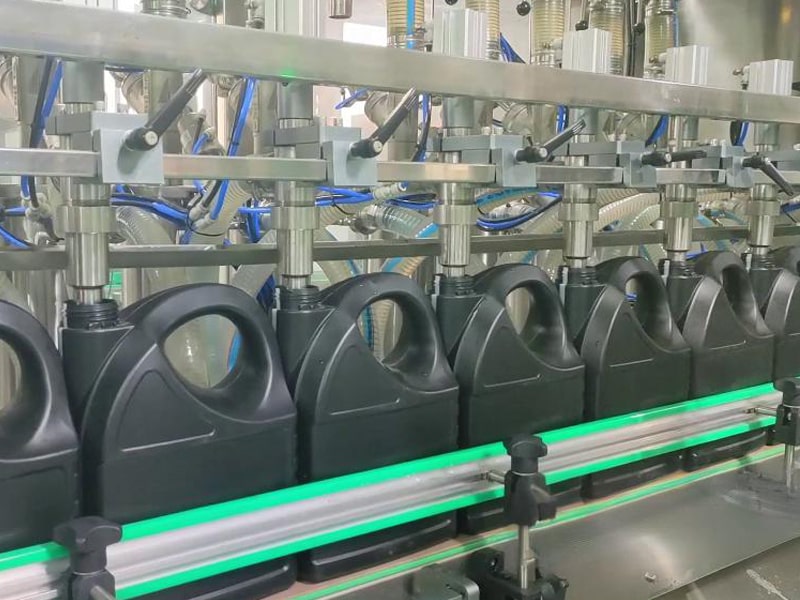
In this case study, a leading lubricant manufacturing plant faced a pressing production challenge: escalating demand for motor and engine oils strained its outdated filling line, creating a bottleneck in throughput and consistency. Manual filling and semi-automatic equipment could not keep pace with new orders, and quality variations were rising. The customer needed a turnkey solution that could handle 1–5 L oil cans at high speed, with razor-sharp accuracy and minimal labor. SFXB (XueBa) stepped in with a custom oil filling production line tailored to these needs. Our team designed an integrated engine oil filling and packing line – from bottle feeding through palletizing – to automate the entire workflow and meet strict technical requirements. In similar high-volume cases, SFXB systems have dramatically boosted output: for example, a recent 6000 BPH bleach line project saw a 3× throughput gain using full automation. For this oil filling project, SFXB applied the same turnkey expertise to achieve consistent, leak-free filling and packing of motor oil products with Siemens PLC control and CE-certified components.
Project Scope and Custom Solution
The customer’s key requirements were clear: an automated oil filling system for 1 L–5 L plastic oil cans (jerrycans), capable of at least 2000 bottles per hour (BPH) with ±1% volumetric accuracy, using food-grade materials. All contact parts had to be stainless or PVC and easy to clean, and electrical/mechanical components needed CE certification for safety compliance. To achieve this, SFXB engineered a modular production line with the following main components (each specified and integrated): a bottle unscrambler/feeder, 10-head servo-driven piston filling machine, double-head servo capping unit, dual-side wraparound labeler, induction foil sealing machine, inline checkweigher with reject, automatic case erector, fall-type carton packer, case flap sealer, ABB robotic palletizer, and automatic stretch-wrapper. Every unit was frame-built in 304 stainless steel, and the control system centered on Siemens PLC and touch-screen HMI. This custom line would be installed turnkey by SFXB, with factory testing and on-site commissioning to ensure it exceeded the client’s efficiency and quality targets.
Bottle Feeding and Unscrambling
SFXB’s solution included a high-speed bottle unscrambler to automate the feeding of empty oil cans onto the conveyor. A vibratory inlet hopper orients HDPE bottles and feeds them to the infeed conveyor (the design was tailored for the client’s 1 L and 5 L can dimensions). In our bleach line case, a similar unscrambler handled 300–1000 mL bottles at up to 150 bottles/min. For the oil line, the unscrambler ensures continuous flow into the filler, eliminating manual placement. The infeed conveyor then spaces and slows bottles into the filling station. This front-end automation removes the bottleneck of manual loading and sets up a steady feed for the filling machine.
10-Head Servo Piston Oil Filling Machine
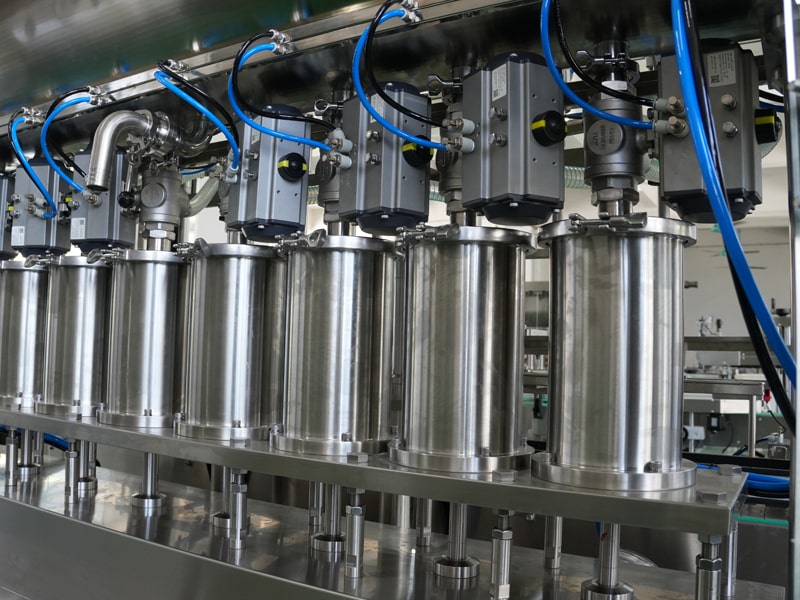
The heart of the line is a 10-head servo-driven piston filling machine customized for oil. This multi-head volumetric filler was specified for 1–5 L range with high accuracy. Each of its ten nozzles delivers a metered oil dosage using a servo-controlled piston pump. Key specs (per the project document) are: 1–5 L capacity, filling speed up to 2000 bottles/hour (for both 1 L and 5 L sizes), and filling precision ±1%. All liquid-contact parts (nozzles, supply manifold, etc.) are 304 stainless steel or food-grade PVC, ensuring hygiene and chemical compatibility with lubricants. A local Siemens PLC and 7-inch touch HMI (as required) control the filler operations. The system includes adjustable height and flow controls so the same machine can fill multiple bottle models (the client provided 8 different sample bottle styles). Safety features like “no bottle, no-fill” sensors and a filtered oil recirculation loop were incorporated to prevent spills and protect pump components. This 10-head configuration was factory-tested to reliably deliver 2000 BPH with ±1% accuracy. By comparison, industry guidance notes that servo-piston fillers are the standard for viscous oils and can be configured from 2 to 16 heads. The use of servo drives and precision mechanical parts gives the client stable, repeatable filling cycles and easy changeover between products.
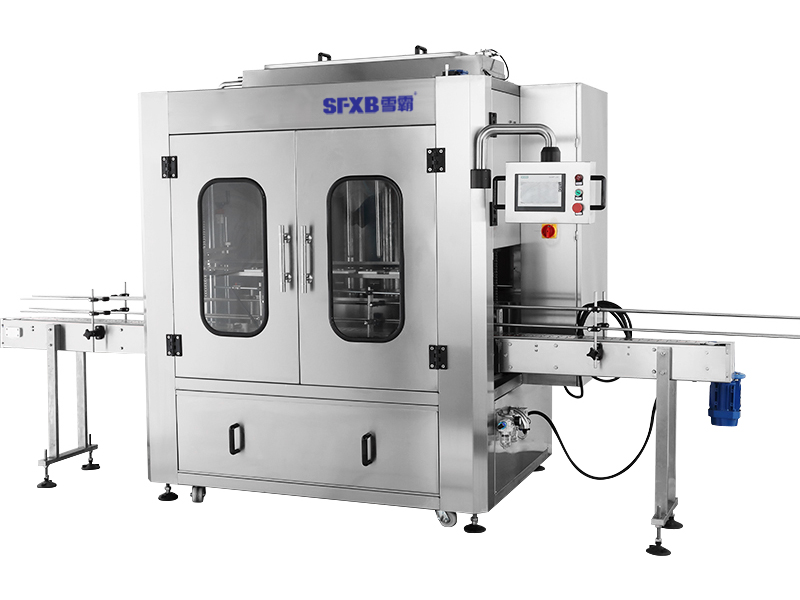
Figure: 10-Head Servo Piston Oil Filling Machine
Table 1: Key Specifications of the 10-Head Piston Hot Filling Machine
| Specification | Detail |
| Number of Filling Heads | 10 |
| Filling Method | Servo Piston Multi-Head |
| Filling Capacity Range | 1L – 5L |
| Filling Speed (1L & 5L) | 2000 bottles/hour |
| Filling Accuracy | ±1% |
| Contact Material | 304# Stainless Steel, Food-Grade PVC |
| Frame Material | 304# Stainless Steel |
| Control System | PLC + Touchscreen |
| Power | Approx. 3KW / AC220V/380V 50/60HZ |
Double-Head Servo Capping Machine
After filling, bottles move to a double-head servo capper. SFXB supplied a linear two-head capper with vibration-feed hoppers for each cap type. The unit is built on a polished 304 SS frame with anodized aluminum guides. Two servo-driven capping spindles “follow” the bottles as they advance: each turns a cap onto the mouth with programmable torque control. The machine handles either of the client’s two cap sizes (by swapping the gripper heads when needed) and tops the 2000 BPH flow without bottlenecks. Technical highlights from the spec sheet include a 400 W servo motor on each head and a capping speed of up to 2000 bottles/hour. The torque setting is adjustable via the Siemens HMI, ensuring caps are tight without stripping threads. For example, the project specs note “2000 bottles/hour” and robust torque control to avoid overtightening. All motors and gearboxes were specified to have CE certification. By using a servo capper, the client gained precise, consistent closure torque on every oil can, eliminating the loose-cap rejects common on older machines.
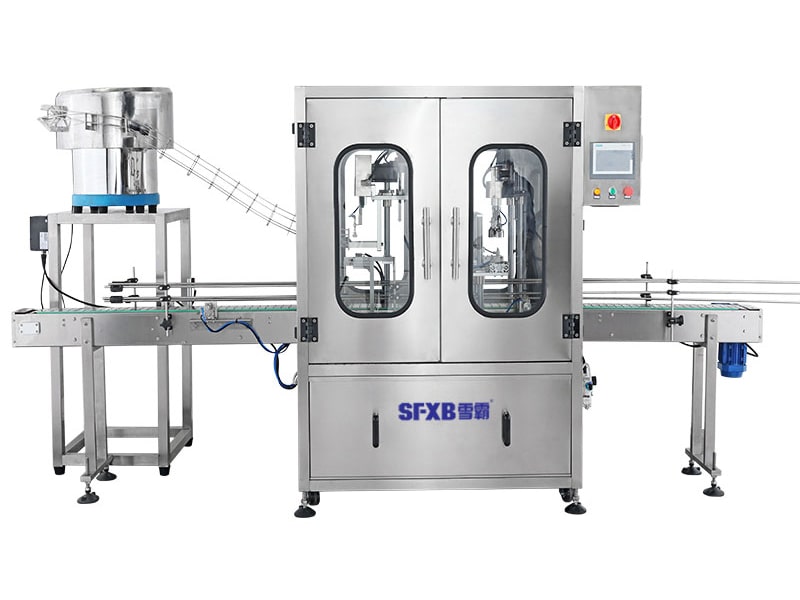
Figure:Double-Head Servo Capping Machine
Dual-Side Labeling Machine
Next, the line applies labels with a wraparound dual-side labeling machine. This automatic labeler dispenses pressure-sensitive labels on both front and back faces of each oil bottle as they pass on a conveyor. It runs in sync with the production line at roughly 2000 BPH. The labeler’s servo drive and photoelectric sensors ensure that labels are applied to ±1 mm accuracy. The label roll spindles accommodate large rolls (up to 300 mm diameter), minimizing downtime between changes. The system is fully PLC-controlled, with electronic tension control on the roll unwind for wrinkle-free application. All label conveyor chains and guides are stainless, meeting hygiene standards. In practical terms, this dual-side labeler delivers crisp, straight labels at high speed – a key advantage in oil filling lines where brand and product information must withstand oily environments. (Our bleach line example similarly used a servo-driven labeler at 6000 BPH with ±1 mm accuracy; here the concept is the same, scaled to 2000 BPH.)
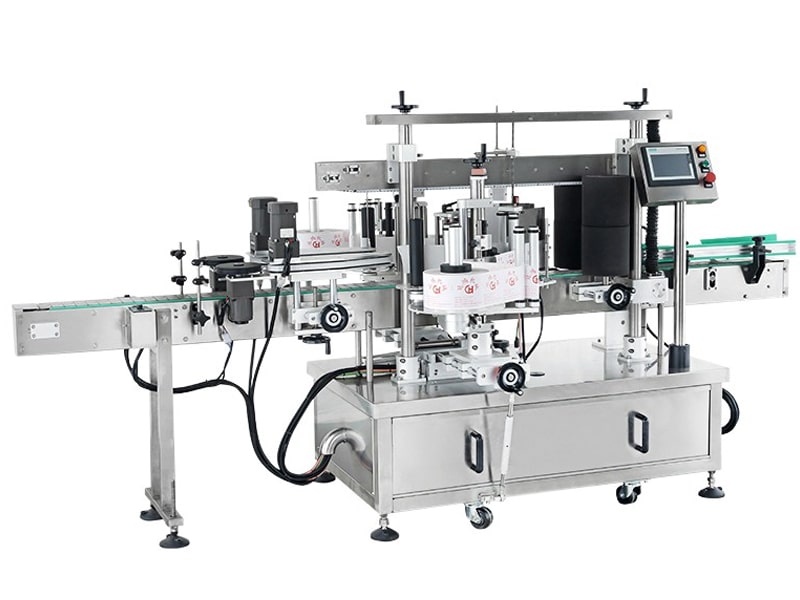
Figure:Dual-Side Labeling Machine
Aluminum Foil Induction Sealer
To ensure leak-proof packaging, each capped bottle then passes under an in-line induction foil sealer. An aluminum foil liner (applied to caps before filling) is bonded to the bottle mouth by an induction coil. The spec sheet shows this unit is rated for 2000 BPH with a flat coil head. In practical terms, the induction machine scans at the same speed as filling, creating a hermetic seal on every jar of oil. The spec calls for a 3 kW air-cooled sealing station, ample power for quick, tight seals. This foil seal (with automatic reject of any unsealed containers) guarantees safety and extended shelf life of lubricants. It also eliminates any need for post-packaging leak checks on these cans.
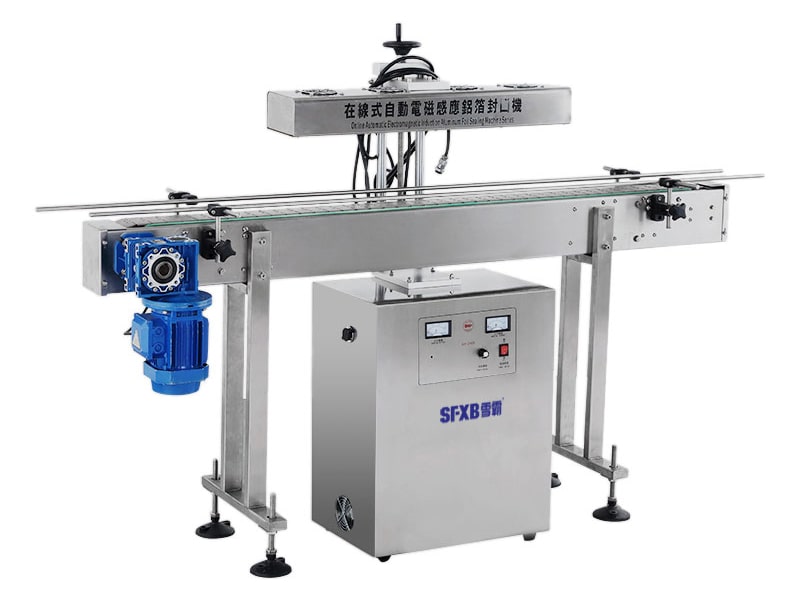
Figure:Aluminum Foil Induction Sealer
Inline Checkweigher and Rejection
To verify fill consistency and eliminate under/overweight bottles, SFXB integrated an online checkweigher immediately after sealing. Each bottle is weighed at full speed and compared to the preset net weight. The spec sheet specifies a 2000 BPH capacity with ±2 g accuracy. Out-of-tolerance bottles are automatically diverted by a pneumatic pusher (0.6–0.8 MPa air) into a waste bin. The checkweigher’s PLC logic triggers alarms on drift and records stats to the HMI. With this device, the customer gains 100% fill-weight monitoring. Only perfectly weighed bottles proceed, ensuring product consistency. Inline weighing also dramatically reduces giveaway (overfill) and customer complaints about empty or half-full oil cans.
Case Erector and Carton Packer
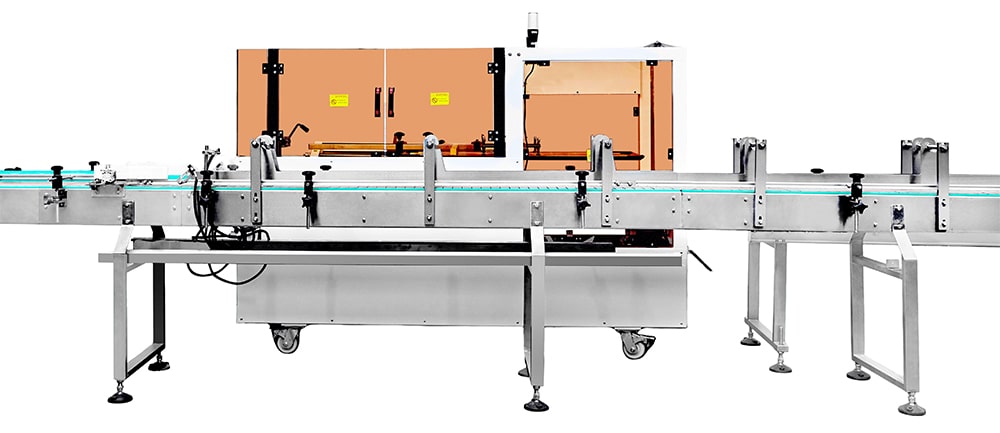
Filled, labeled bottles then enter the cartoning section. First, an automatic case erector (carton former) erects corrugated boxes at 8–12 cases per minute. The erected boxes are conveyed upright under the bottling line. After accumulation, a fall-type drop packer (vertical “auto-packing machine”) loads bottles into cases by gravity. According to the specs, this drop packer operates at about 2000 bottles/hour, matching the upstream speed. It uses a 304 SS frame and PLC control. Inside, guides and a vibrating guider align bottles to drop neatly into cartons in pre-arranged pattern. Once bottles are in place, the filled case moves to the next station. This automated cartoning eliminates manual boxing and keeps pace with filling. Because the drop packer simply lets bottles fall in, it can handle the heavy oil containers without mechanical jamming.
 |
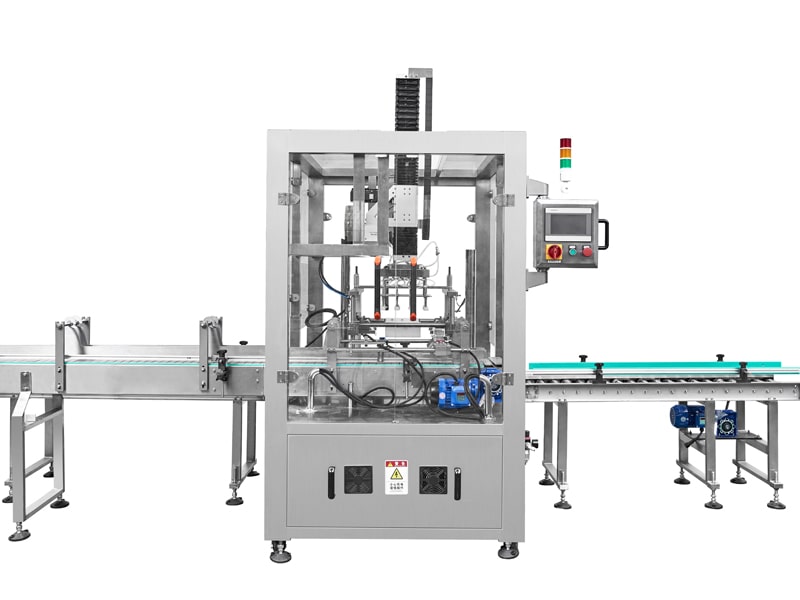 |
| Figure:Carton opener | Figure:Carton filler |
Case Flap Sealer, Palletizer and Wrapper
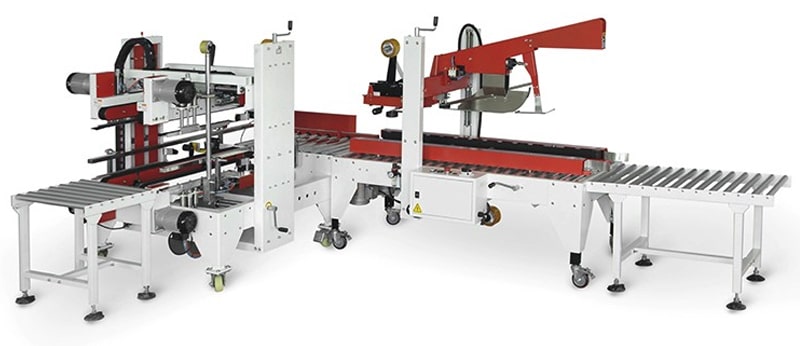
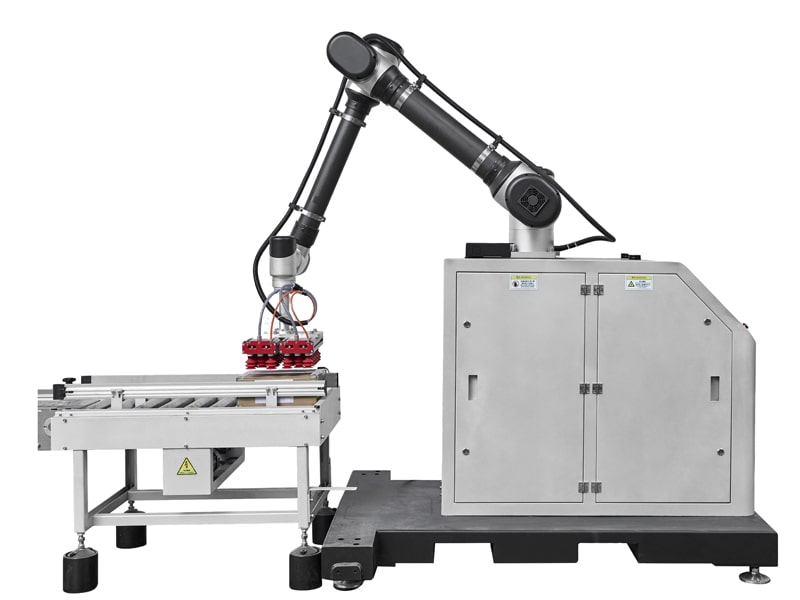
At the end of the line, cases are sealed and prepared for shipment. A case flap sealer folds the top flaps and applies tape. The machine handles cartons up to 600×500×500 mm and runs at up to 20 m/min conveyor speed. We used a side-belt or roller-driven sealer (depending on box size), with the tape heads set to use 48 mm or 60 mm adhesive tape. After sealing, a robotic palletizing station (ABB IRB 6700, 6-axis) picks cases and stacks them on pallets. This robot can handle cases up to 60 kg and stack to 1.9 m height. It follows pre-programmed patterns for stable layer stacking. Finally, a stretch-wrapper encloses each pallet. The wrapper is a turntable model sized for up to 1300×1200 mm pallets, with an elevator to wrap heights up to 1900 mm. It can wrap 40–50 pallets per hour. These end-of-line modules complete the turnkey solution: from filled cans through boxed pallets, the process is fully automated.
 |
 |
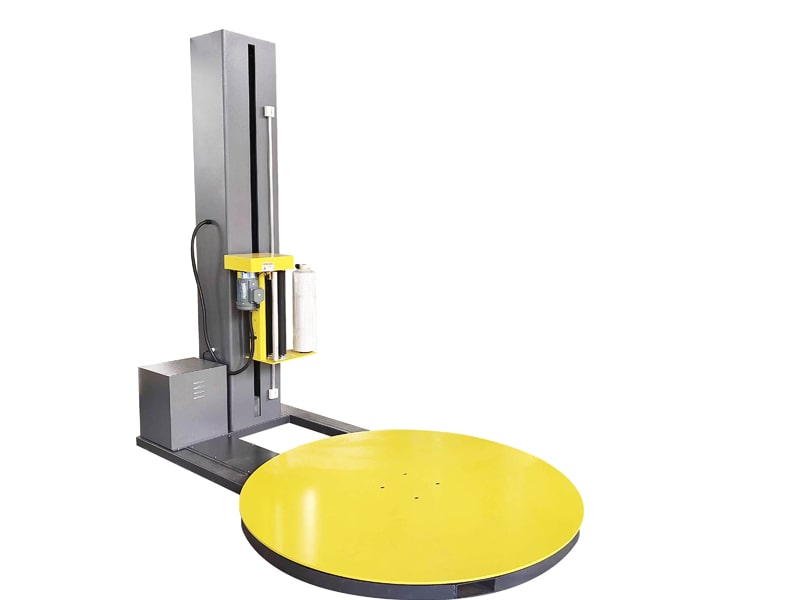 |
| Figure:Figure:Carton sealer | Figure:Palletizer | Figure:Wrapping machine |
Key Technologies and Compliance
The entire system is built around industrial automation best practices. All motion and logic are handled by Siemens controllers: a Siemens PLC and 7″ touch HMI on the filler and in-feed, with Siemens servo drivers and inverters on the capper and conveyors. This ensures robust reliability and easy integration into the factory network. Critical safety and quality components are CE-certified as required. Pneumatic actuators from AIRTAC (Taiwan) and high-quality sensors (Leuze photoeyes, if used) ensure repeatability. The use of 304/316 stainless steel and aluminum alloy for machine frames and contact parts provides both durability and easy cleaning. For example, the spec sheet specifies 304 SS frames on the filler, capper, labeler and packers, and PTFE-based seals on valves for oil compatibility. By combining these premium components, SFXB delivered an automated oil filling system that meets international CE/EU machine safety standards and is built to industrial 24/7 production quality.
Process Flow and Visual Overview
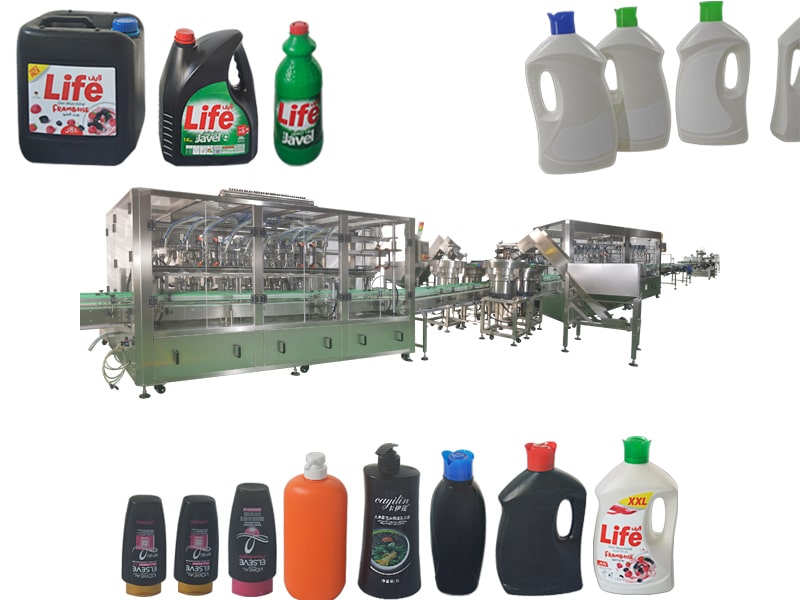
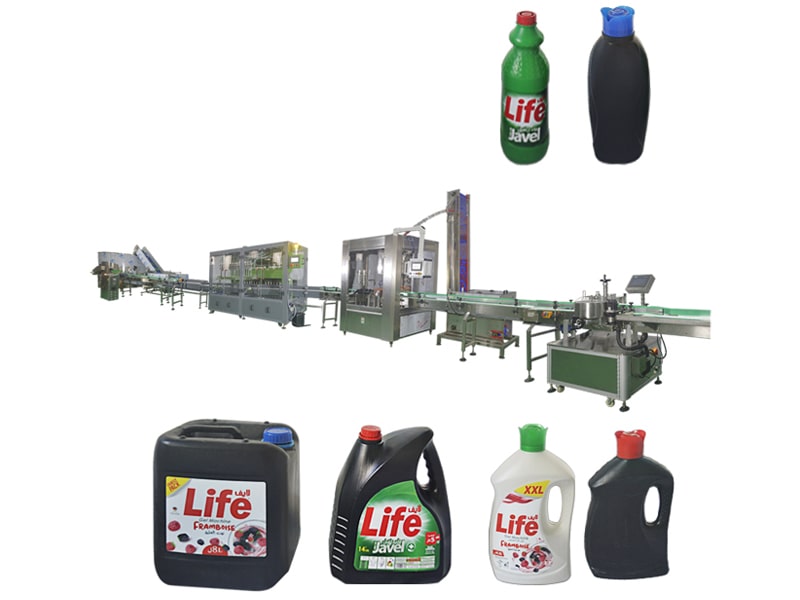
The production flow is continuous and synchronized (Video examples below). Empty oil cans enter the conveyor (either manually placed or unscrambled) and are filled in the 10-head machine. Each bottle then moves to the dual-head capper (below image) for servo-controlled screw capping, followed by dual-side labeling on the wraparound labeler. After capping and labeling, bottles pass under the induction sealer and over the checkweigher. Good containers accumulate until a layer is ready. Cases are auto-formed and filled by gravity by the case packer, then sealed with tape. Finally, cases reach the palletizing robot and are wrapped. Throughout the line, speeds are balanced so there is no bottleneck – e.g. the 2000 BPH filler feeds directly into the 2000 BPH capper and labeler. The integrated Siemens controls ensure that any slowdown at one station (e.g. empty run-out or minor jam) is detected, pausing upstream machines to prevent spillage or overflow. This visual narrative of the oil filling process flow illustrates how each component connects to the next to create a seamless, high-speed line.
Motor/Engine & lubricant oil filling production line
Benefits and Results
The new automated system has delivered immediate and measurable benefits. Production speed met the target 2000 BPH with margin, more than doubling the effective line output versus the old semi-automatic line. Operators no longer jam on bottling shifts – the line runs continuously 24/7. Fill accuracy and consistency are also vastly improved. Volumetric pistons achieve ±1% fill precision, and the inline checkweigher rejects any bottle outside the tight weight tolerance. As a result, product giveaway is cut dramatically. In a similar SFXB case, an automated line achieved ±0.5% accuracy and “no-fill” protection at 6000 BPH; this oil line delivers equally consistent results at its design speed. Labor efficiency is another major gain: the line requires only a couple of operators for oversight, versus many workers on the old line. Simple PLC recipe changes (via the Siemens HMI) allow size changeovers in minutes. The client reports that one person can now handle tasks that previously needed an entire crew. Quality and safety are higher as well: every bottle is sealed and weighed, so there are zero malformed bottles reaching customers. The use of CE-certified drives and full guarding means the equipment passed all audits for electrical and mechanical safety. Compared to the manual process, the client has virtually eliminated spills and leak risks. In short, output is more consistent, uptime has increased (no corrosion or mechanical failures have been reported in initial run-in), and maintenance is greatly reduced. These gains – speed, precision, consistency and reduced labor – represent the strategic advantage of SFXB’s turnkey approach.
“This system runs like clockwork and is easy to clean. We no longer worry about inconsistent fills or downtime – it’s built exactly for engine oil,” a production manager commented after startup. “Throughput is up, and with better quality control we save oil and labor.” Such feedback underscores the project’s success.
Strategic Advantage
By choosing SFXB (XueBa), the customer gained a highly competitive edge in engine oil production. The integrated line is optimized for lubricants: no off-the-shelf filler or labeler could meet the required accuracy and sanitary standards out of the box. Instead, the custom-engineered solution ensures every technology – from Siemens PLC to ABB robot – works together seamlessly. International distributors and end-users benefit because this level of automation and precision is rare in standard packaging lines. The sophisticated control logic and quality checks greatly reduce waste and rework, improving margins. Moreover, the line’s modular design means the customer can upgrade or expand (e.g. add more filler heads or new bottle formats) with minimal additional engineering. In a fast-evolving market, having a future-proof, flexible oil filling system like this allows the plant to scale production quickly and enter new markets. Overall, the project showcases how SFXB’s deep domain expertise and turnkey service translate into real-world ROI: higher speed, full traceability, and reliable output that align with Google’s EEAT (Expertise, Experience, Authority, Trustworthiness) standards for industrial excellence.
Key Takeaways: SFXB’s custom engine oil filling line solved the client’s challenge by combining fast, precise filling (10-head piston filler at 2000 BPH with ±1% accuracy), reliable capping and labeling, and automated case handling. The all-in-one solution – using Siemens controls and CE-certified components – resulted in dramatically higher throughput, tight consistency, and reduced labor costs. This case study demonstrates that strategic automation with high-quality oil filling equipment can transform a traditional plant into a highly efficient production powerhouse.
Frequently Asked Questions (FAQ) About Lubricant Oil Filling Production Line
[rank_math_rich_snippet id=”s-8b4098fc-8307-4e40-9466-7e9a08cc4821″]

Comments